The Anatomy of a Winning Pitch Deck
Learn the key elements of crafting a compelling pitch deck with real-world examples from successful startups.


Pitching to investors can feel like a wild ride, especially with so much competition out there. But by looking at what’s worked for other successful startups, we can break down the key elements that make a pitch deck truly stand out.
Blueprint for a Successful Pitch Deck
Here are the common elements that make up a successful pitch deck:
- Research Trigger: A hook that resonates with the person you’re pitching to.
- Who You Are: A brief, but powerful introduction to your team and mission.
- The Problem: A clear explanation of the problem your product or service aims to solve.
- The Solution: Your unique approach or product that addresses the problem.
- Why now?: Explain why this is the perfect moment to tackle this problem, driven by key technological advancements and/or favorable market conditions.
Let’s see how some top startups have nailed these elements in their pitch decks.
1. Start with a Research Trigger
Every great pitch deck kicks off with something that grabs attention—a research trigger that connects with your audience. This could be an eye-opening stat, a relatable problem, or a thought-provoking question. The goal is to make the person you’re pitching to care about what you’re saying.
Example: Front
In Front’s series C funding round, Front raised $59 million, with notable investors including Eric Yuan, Frederic Kerrest, and Jared Smith.
Front is a customer communication platform that centralizes messages from various channels into one shared inbox, enhancing team collaboration. It integrates with other tools and automates workflows, making it ideal for companies handling high volumes of communication.
Front doesn’t start their pitch with that though. Instead, they starts with this:
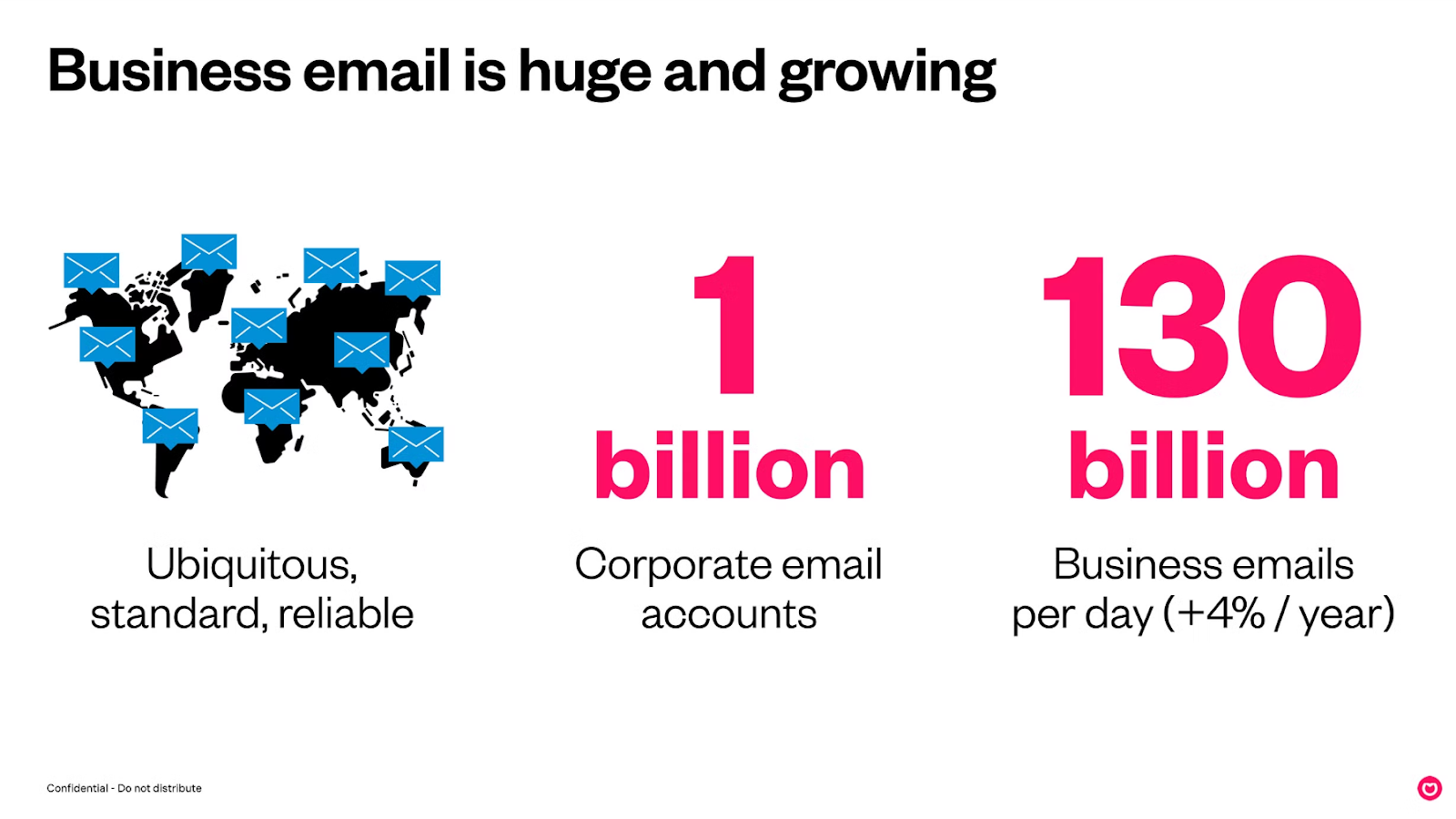
The “Research Trigger” slide is a relatable bit of info that grabs your audience’s attention and makes them pay attention to the rest of your pitch. Without this slide, the rest of your pitch might as well be a bunch of white noise.
2. Clearly Define Who You Are
Once you’ve hooked your audience, introduce your team and mission. Investors want to know who’s behind the product, not just what it is. Keep this part brief but impactful, showing off your team’s credibility and passion.
Example: clare&me
In clare&me’s pre-seed funding round, the company raised €1 million, with notable investors including Antler, YZR Venture Capital, and Hans Raffauf.
clare&me is a Berlin-based mental health startup that offers an AI-powered companion, Clare, to provide 24/7 support via phone calls, WhatsApp, and SMS. The platform aims to bridge the gap between the high demand for mental health services and the limited supply, making it easier for users to access judgment-free, AI-driven mental health support anytime, anywhere.
In clare&me’s pitch deck, their about slide looks like this:
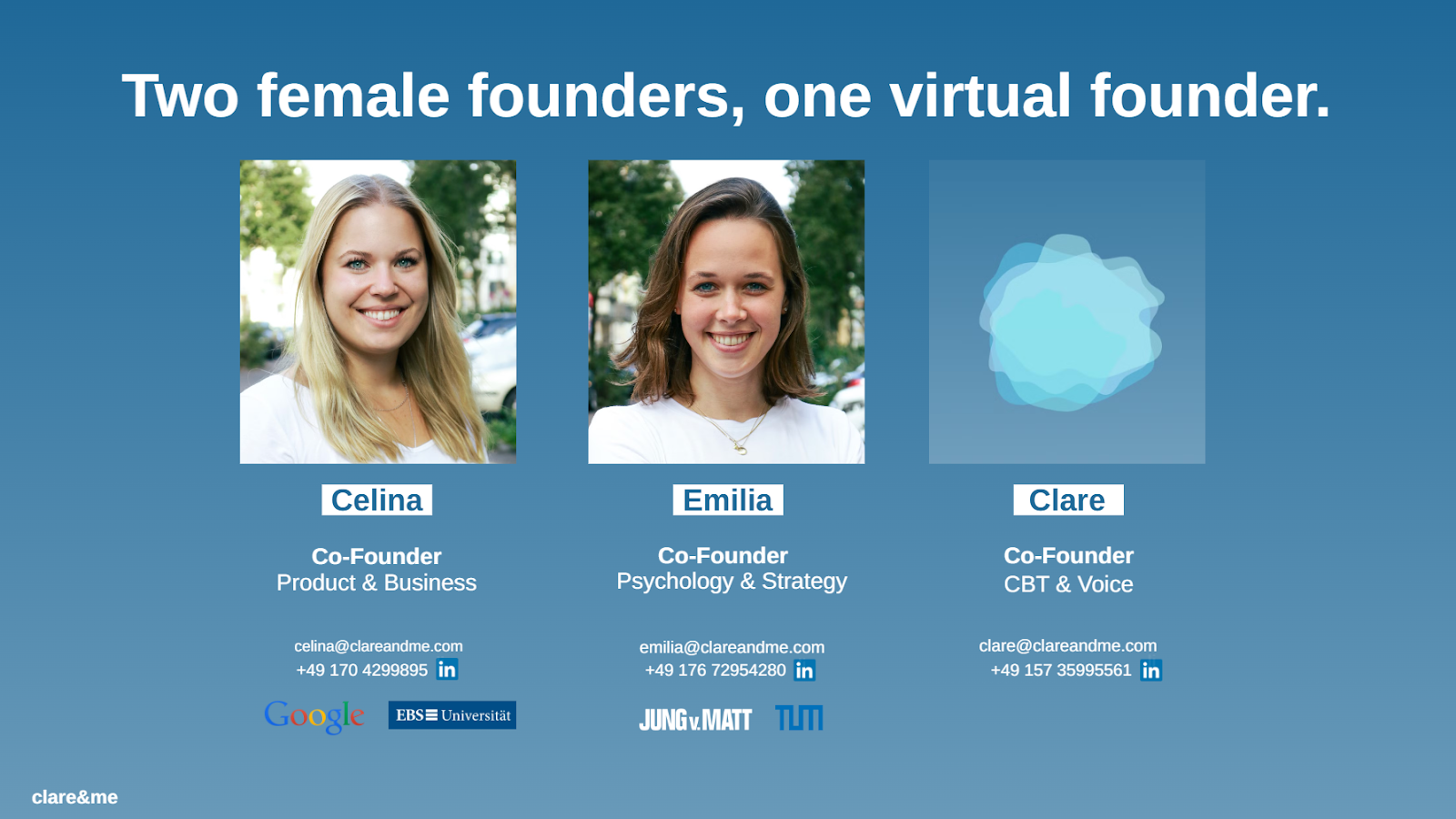
The goal of the “Who You Are” slide is to convince investors that your team has the capability, experience, and drive to successfully execute the business plan. This slide is a critical component of building confidence in your startup.
3. Articulate the Problem
This slide is where you spell out the challenge your product or service is addressing. It’s not just about identifying a pain point; it’s about making the audience see and feel the problem. The best problem statements are those that make the audience think, “Yes, I’ve faced that issue too.”
Example: Beelinguapp
In Beelinguapp’s pre-seed funding round, the company raised $1.1 million, with investments from Joyance Partners and EquityPitcher Ventures.
Beelinguapp is a language learning app that helps users improve their language skills by reading and listening to stories in different languages side-by-side. The app uses an innovative approach, allowing users to read text in their target language while simultaneously following along in their native language, making it easier to learn new vocabulary and improve comprehension.
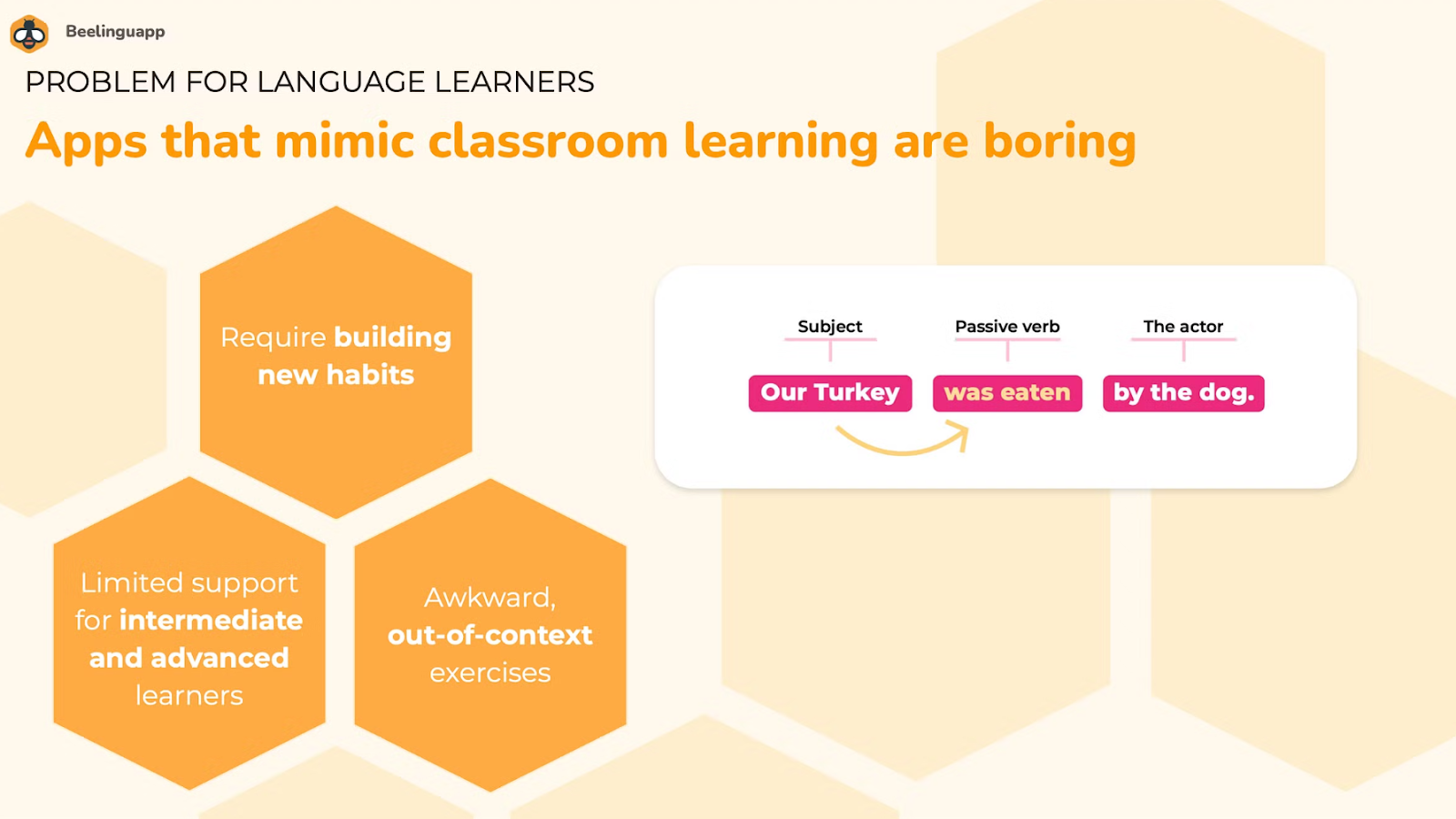
A “The Problem” slide in a pitch deck is designed to clearly and compellingly articulate the specific issue or pain point that your product or service aims to solve. This slide is crucial because it sets the stage for why your solution is necessary and valuable.
4. Present a Compelling Solution
Once the problem is established, your solution should follow naturally. This is where you demonstrate how your product or service directly addresses the issue. The key is to be both clear and concise, showing the value of your solution without overwhelming your audience with details.
Example: Perfeggt
In Perfeggt’s pre-seed funding round, the company raised €1.1 million, with notable investors including Eric Quidenus-Wahlforss, Verena Pausder, and Deepali Nangia.
Perfeggt is a Berlin-based food tech startup focused on developing plant-based egg alternatives. The company aims to revolutionize the food industry by creating sustainable, plant-based products that replicate the taste and texture of traditional eggs.
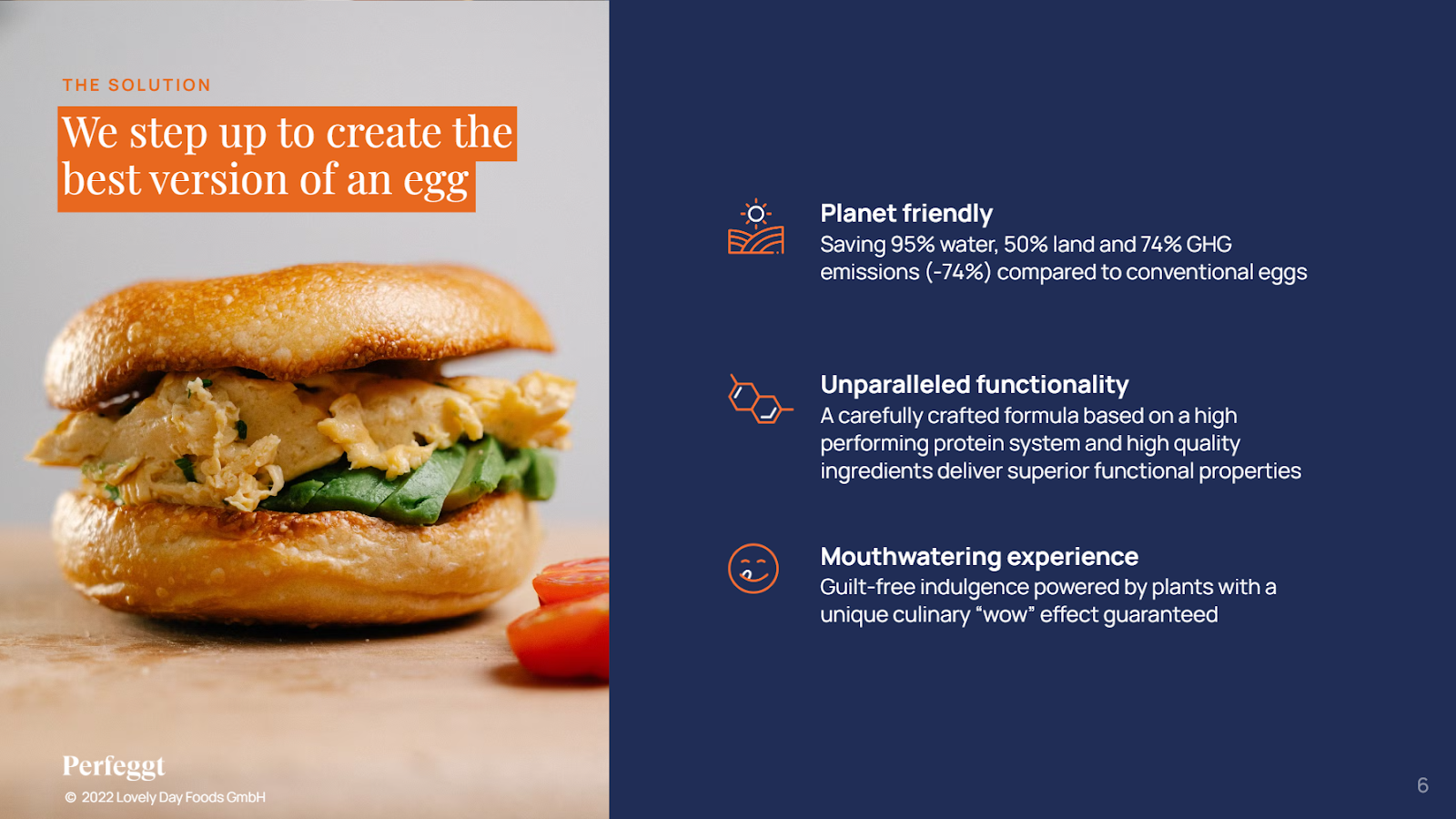
A “The Solution” slide in a pitch deck is where you introduce your product or service as the answer to the problem you’ve identified. This slide should clearly and compellingly demonstrate how your solution directly addresses the pain points and gaps you’ve previously outlined.
5. Why Now?
The “Why Now” slide serves as the bridge between your problem statement and your solution, creating a compelling narrative that drives investor interest. It’s not just about having a great idea—it’s about demonstrating why that idea is ripe for execution at this precise moment.
By highlighting current market conditions, technological advancements, or shifts in consumer behavior, you’re showing investors that there’s a unique window of opportunity that your startup is perfectly positioned to capitalize on. This slide transforms your pitch from a theoretical concept into an urgent, actionable proposition.
The company “Not Less But Better” (Now rebranded to “Wellspent”) effectively presented their “Why Now” slide by focusing on three key factors:
- Increasing awareness: They highlighted that there’s a growing recognition of the negative impacts of excessive smartphone use on mental health and productivity. This indicates a rising demand for solutions to address this issue.
- Regulatory pressure: The slide mentions increasing regulatory pressure on tech companies. This suggests that there’s a favorable environment for products that help manage digital well-being, as regulations may soon require such solutions.
- Market readiness: They point out that the market is now ready for their solution. This implies that consumers are becoming more receptive to products that help manage digital habits.
Example: not less but better ((Now rebranded to “Wellspent”)
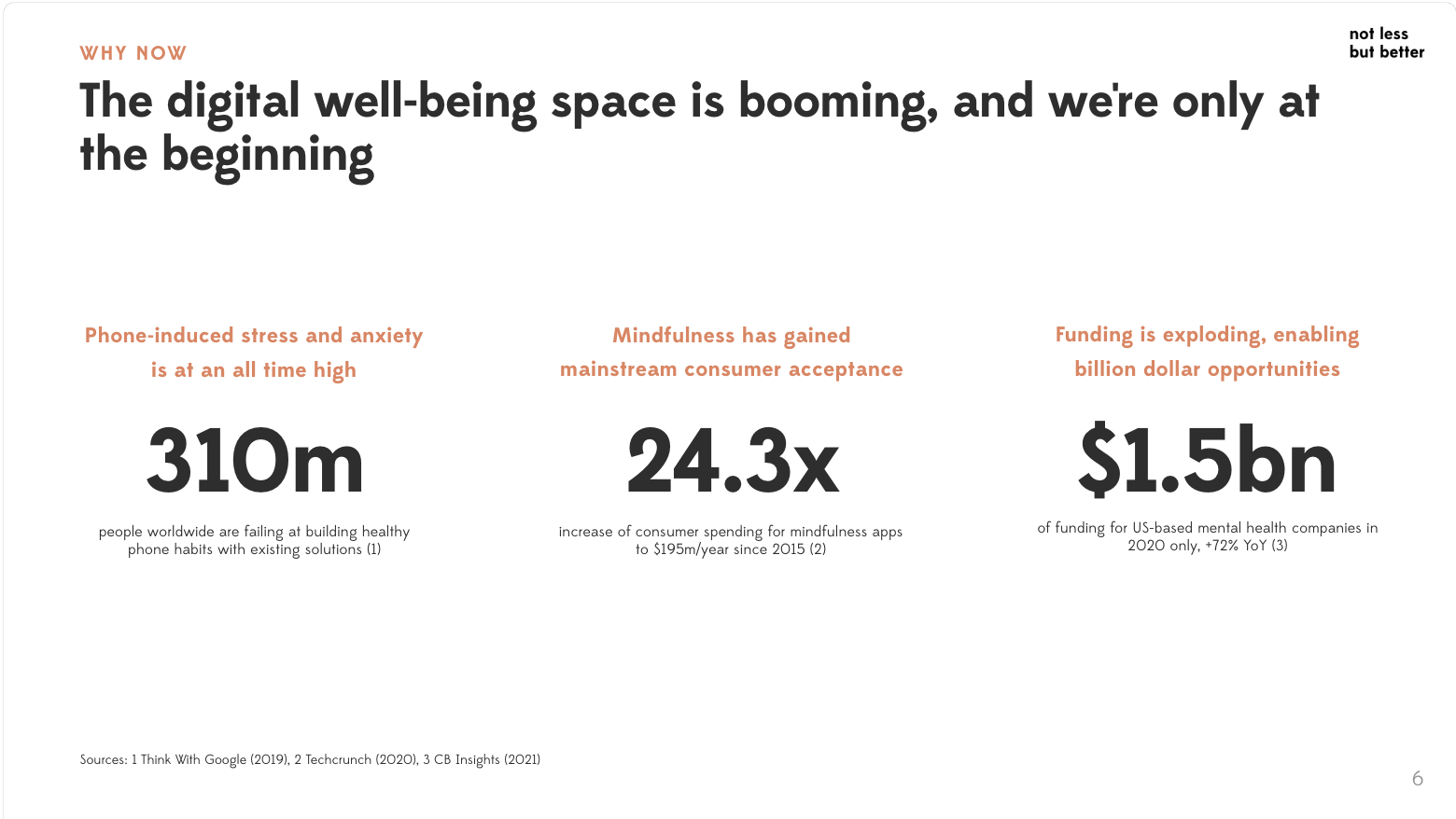
Ultimately, the “Why Now” slide answers the critical question: “Why should investors get on board right now, rather than wait?” It creates a sense of immediacy that can be the difference between securing funding and missing out on a pivotal opportunity.
Recap: Crafting a Pitch Deck That Resonates
A great pitch deck isn’t just about laying out your business idea; it’s about telling a story that sticks. By carefully crafting each slide—starting with a strong hook, clearly defining who you are, laying out the problem, and presenting a solid solution—you can create a narrative that captures attention and motivates action.
Successful startups like Front, clare&me, and Perfeggt have demonstrated the power of a well-structured pitch deck. Their ability to connect with investors, clearly communicate their vision, and present a solution that addresses real-world problems has been instrumental in their success. By following the blueprint laid out in this guide, you can create a pitch deck that not only stands out but also convinces investors that your startup is worth backing.